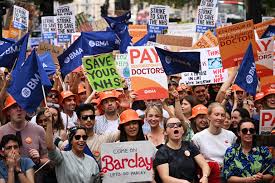
Breakdown in Talks Triggers Largest Junior Doctor Strike of 2025
England’s healthcare system is once again under strain as up to 50,000 resident doctors began a five-day strike at 7am on 25 July, following the collapse of pay negotiations between the British Medical Association (BMA) and the UK government. The industrial action, which is expected to last until 7am on 30 July, comes after weeks of deteriorating relations and mounting public pressure.
The BMA says the strike is necessary to restore pay to pre-2008 levels, citing a 29% real-terms pay cut over the last decade. The government, however, has pushed back, arguing that a 22% pay rise already granted for 2023–25 was fair and final.
NHS Services Remain Partially Operational – But Pressure Mounts
Urgent Care and A&E Still Available
Despite the strike, GP surgeries remain open and emergency services such as A&E and 111 will continue operating, according to NHS England. However, patients are being warned of delays and disruptions to non-urgent care, operations, and hospital staffing levels, with many services operating on skeleton teams.
The NHS has urged patients to continue seeking care when needed, stressing that life-saving services will not be affected, though many appointments will be rescheduled.
Keir Starmer Issues Direct Appeal: “Everyone Loses in This Fight”
Labour Government Caught in the Crossfire
In a dramatic intervention, Prime Minister Keir Starmer appealed directly to striking doctors via an op-ed in The Times, warning that the strikes would “cause real damage.”
“The route the BMA resident doctors committee have chosen will mean everyone loses,” Starmer wrote. “Our NHS and your patients need you.”
He emphasized that public support is waning and urged junior doctors not to follow what he called the BMA leadership’s “damaging road.”
However, the BMA pushed back, accusing Starmer of abandoning labour principles and union solidarity.
The Pay Dispute: What Resident Doctors Are Really Earning
Doctors Earning Less Than Their Own Assistants?
The BMA has launched a national newspaper campaign spotlighting what it calls the “injustice” in medical pay scales. According to the BMA:
-
Newly qualified doctor earns £18.62 per hour
-
Non-medically qualified doctor’s assistant earns over £24 per hour
The adverts aim to “lay bare” the financial disparity and the growing frustration among resident doctors, many of whom say they are overworked, underpaid, and undervalued.
A 29% Pay Rise Demand: Restoration, Not a Raise
The BMA argues that this strike is not about luxury pay but about restoring salaries that have eroded since 2008–09. They insist the 29% hike is what’s required to return to real-terms parity from pre-financial crisis levels.
Government’s Position: “This Strike Undermines the Trade Union Movement”
Health Secretary Wes Streeting Defends Labour’s Offer
Health Secretary Wes Streeting called the BMA’s demands “unreasonable and unprecedented”, noting the 22% pay rise already granted over the current and next fiscal years.
In a Guardian op-ed, he warned that “this strike enormously undermines the entire trade union movement.”
In a letter sent directly to doctors, Streeting expressed regret over the failed negotiations but stood firm on pay limits:
“I deeply regret the position we now find ourselves in,” he wrote. “I cannot pledge a bigger pay rise, but I am committed to progress to improve your working lives.”
The letter, however, was swiftly dismissed by the BMA as “vague promises” with no substance on core pay concerns.
BMA Responds: “Labour Has Gone Back on Its Word”
Union Chair: Doctors Facing Retaliation for Striking
Speaking on BBC Radio 4’s Today Programme, BMA Chair Dr Tom Dolphin expressed disappointment at what he characterized as Labour’s hardline stance against its own medical workforce.
“It’s very disappointing to see a Labour government taking such a hard line against trade unions,” Dolphin said.
He claimed doctors are facing threats of training delays, loss of locum shifts, and other retaliatory measures for joining the strike.
“If we find cases of people being held to detriment having taken part in strikes, we’ll be fighting their case,” he added, warning that such actions may not be legal.
Behind the Numbers: The Economic Argument
Why the 22% Increase Isn’t Enough
While a 22% increase might appear generous on paper, doctors argue it barely makes a dent in years of below-inflation pay awards and rising living costs.
Medical professionals also point out the mental and physical toll of working in the NHS during and after the COVID-19 pandemic, with increased burnout, staff shortages, and longer hours now the norm.
Resident doctors — typically early-career physicians — are among the most overworked segments of the NHS, rotating through departments every few months, often working unsocial hours with limited support.
The Political Fallout: Labour’s Health Gamble
Is Starmer Alienating the NHS Workforce?
This strike puts Keir Starmer’s Labour government in a delicate position. Having campaigned on a “pro-NHS, pro-worker” platform, the government now finds itself opposing a union-led strike over what many see as fundamental fairness.
By resisting further wage increases, the government risks losing goodwill among NHS workers — and possibly unions across other sectors, who may now question Labour’s alignment with traditional labour causes.
Will Public Opinion Shift?
While polls initially showed some support for the BMA’s position, public sentiment may shift if operations and care services face severe disruption. The government appears to be banking on that shift to justify its tough line.
What’s Next: No Talks Scheduled, Tensions Remain High
As the five-day strike unfolds, no new talks have been scheduled between the BMA and the Department of Health. With both sides digging in, the risk of future strikes looms large — and the possibility of lasting damage to the NHS workforce remains real.
The BMA has said it is open to negotiations but refuses to call off strikes without serious movement on pay restoration. The government maintains that further raises are not fiscally responsible.
A Critical Juncture for UK Healthcare
This strike is more than a pay dispute — it’s a defining moment for NHS labour relations under a new government. With 50,000 doctors off the job, the message is loud and clear: restoration, not just recognition, is overdue.
Whether Labour can strike a balance between fiscal discipline and workforce morale will determine not just the outcome of this strike — but potentially the long-term health of the NHS itself.