A New Chapter in UK-France Migration Strategy
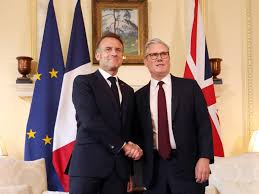
In a move set to redefine cross-Channel migration policy, UK Prime Minister Keir Starmer and French President Emmanuel Macron are expected to jointly unveil a new “one in, one out” migration agreement. The deal, which caps a three-day state visit by Macron—the first by a European leader since Brexit—marks a critical evolution in Franco-British cooperation on asylum and immigration.
Under this pilot framework, the UK will accept a limited number of asylum seekers who have crossed the Channel while returning others to France. The goal: to curb the growing number of small boat crossings by disincentivizing people smuggling networks.
Though talks are still ongoing as of Thursday morning, sources close to the negotiations suggest that earlier opposition from other European nations has been largely resolved, setting the stage for formal announcement later today.
The Deal’s Core — How “One In, One Out” Works
Pilot Program and Numbers
According to leaked details from Le Monde, the UK would initially send back around 2,600 people annually—roughly 6% of the current total number of crossings. In exchange, Britain would take in an equivalent number of vetted asylum seekers from France, aiming to create a manageable and enforceable rotation system.
While critics may argue that the scale is modest, supporters in both governments suggest that even a pilot version could quickly undermine the economic incentives driving human smuggling operations.
Technology and Enforcement Tools
The UK is planning to supply Border Force officers with mobile biometric testing kits to determine the legal work status of asylum seekers. This measure is intended to alleviate French concerns about the UK’s “shadow economy” attracting undocumented workers.
Meanwhile, France has agreed to intercept boats within 300 meters of its shoreline. However, French officials have flagged potential legal challenges to this policy in domestic courts, creating a layer of complexity that could delay implementation.
The Politics Behind the Policy
Why Now?
Multiple factors have enabled this breakthrough. Key among them is Labour’s decision to abandon the controversial Rwanda deportation scheme, which had long been a sticking point for European negotiators. The personal rapport between Starmer and Macron also appears to have played a pivotal role, fostering a climate of diplomatic trust rarely seen in UK-France relations post-Brexit.
Additionally, Labour’s crackdown on illegal work—a move aimed at dismantling the UK’s informal labour market—has reassured French officials that Britain is serious about removing pull factors for undocumented migrants.
The Funding Flashpoint
Despite diplomatic progress, financial negotiations remain thorny. Paris is requesting additional funding to cover the expanded responsibilities, including more patrol boats, drones, and boots on the ground.
The UK has previously committed £480 million over several years to enhance French coastal enforcement. Whether this new deal will require another large-scale transfer remains a live—and politically sensitive—question. As of Thursday, talks were still ongoing about final figures and timelines for implementation.
Business Impact and Policy Signals
Stability for Employers, Uncertainty for Policy Analysts
For CEOs and institutional investors, the policy sends a strong signal that the UK is moving toward more rules-based, bilateral migration governance. This could reduce the risk of disruptive immigration shocks and lawsuits, providing a more stable environment for long-term planning.
However, the operational details remain vague. Without concrete enforcement mechanisms or legal guarantees, the deal could face legal and logistical hurdles—particularly in French courts.
Voices from Both Sides
Critics Warn of Limited Impact
Immigration rights groups and opposition MPs have already voiced skepticism, arguing that the 2,600-person figure is symbolic and unlikely to have a major effect on the broader migration issue. They also caution that returns systems often get bogged down in legal appeals and human rights challenges.
Supporters Call It a Step Forward
Nonetheless, policymakers on both sides view the agreement as a foundation for broader European cooperation. A senior Labour official told reporters, “This is about proving we can manage borders humanely and collaboratively, without resorting to cruel gimmicks like the Rwanda plan.”
What Comes Next?
While today’s announcement will be rich in symbolism, the true test will be execution. Key unanswered questions include:
-
When does the pilot officially begin?
-
What metrics will determine success or failure?
-
Will other EU countries be invited to join similar arrangements?
-
How will legal challenges be managed in both jurisdictions?
For now, Starmer and Macron will take to the podium in London with a clear message: post-Brexit Britain and continental Europe can still find common ground—even on the thorniest issues.
As one French negotiator put it: “We are finally speaking the same language—security, stability, and shared responsibility.”